
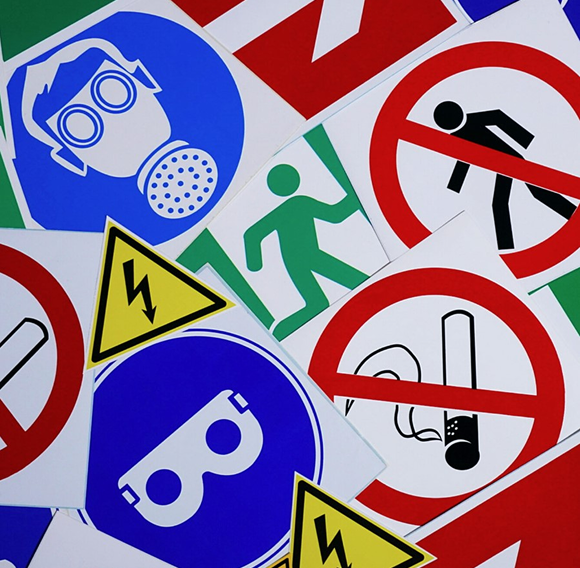
If you run a business in Warrington, the safety signs you need will depend on the premises, the work being carried out, and the risks staff, visitors, or customers may encounter.
A small office will not need the same signs as a warehouse, workshop, school, salon, café, gym or industrial unit. The right signage in Warrington should be based on the areas people use, the routes they take, the hazards they may meet and the instructions they need before entering or using a space.
Health and safety signs are not there to fill empty walls. They are there to give a clear warning, instruction, or direction when needed. A good safety sign should be easy to see, easy to understand and placed before someone needs to act.
This guide explains the main types of safety signs Warrington businesses may need, where they are usually used and what to check before ordering signs for your workplace.
Start With the Risks in Your Premises
The best place to start is the layout of your premises and the risks people may come across. Safety signs should reflect how the building is actually used, not just copy what another business has on its walls.
For example, a shop may need fire exit signs, staff-only signs and wet floor warnings. A warehouse may need forklift signs, PPE instructions, loading bay signs and restricted area signs. An office may need fire exit signs, first-aid information, and signs to prevent visitors from entering private rooms.
We can produce health and safety signs for Warrington workplaces where clear warnings, instructions or emergency information need to be visible.
The important point is that signs should be used where they help people understand something that matters. If there is a hazard, instruction or emergency route that someone needs to see quickly, a sign can help. If there is no meaningful risk or the sign does not help anyone act more safely, it may not be needed.
This is why a quick look around the premises is useful before ordering. Check entrances, corridors, fire exits, customer areas, staff areas, storerooms, loading areas, plant rooms, kitchens, workshops, car parks and any space where visitors may be unsure where they can or cannot go.
Fire Exit and Fire Safety Signs
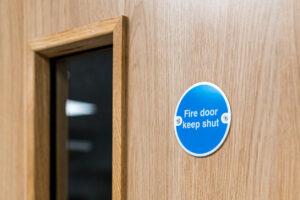
Fire safety signs are among the most common in workplaces. They help people find the correct route out of the building and identify fire safety equipment when it is needed.
Fire exit signs are especially important for visitors, customers, contractors and new staff who do not know the building well. In an emergency, people should not have to stop and work out which way to go. The route should be clear before they need it.
Depending on the premises, you may also need signs for fire doors, fire extinguishers, fire alarm call points, assembly points and areas that must be kept clear. These signs should be placed where they are useful, not hidden behind stock, furniture, displays or doors that are usually left open.
For a shop, café or salon, fire signs may be needed in customer areas, staff corridors and near exits. For a warehouse or industrial unit, they may also be needed around loading bays, racking areas and wider escape routes. The aim is always the same: people should be able to find the route or equipment without asking.
Warning Signs for Hazards
Warning signs alert people to a hazard. They do not replace proper risk control, but they can make people aware of something they may not notice straight away.
In a Warrington warehouse, warning signs might be needed around forklift routes, loading bays, uneven floors, low ceilings or areas where vehicles move. In a workshop, they may be used around machinery, electrical equipment, hot surfaces or stored chemicals. In shops or hospitality premises, they may be needed for wet floors, steps, cleaning areas, or staff-only zones.
If the signs are being fitted outdoors, such as near loading bays, car parks, entrances, yards, or site boundaries, external signs may be needed to keep the warning visible in the right place.
The wording and placement matter. A warning sign should be close enough to the hazard to make sense, but not so close as to be unactionable. A “forklift trucks operating” sign is more useful before someone enters the vehicle route than after they are already in it.
If a warning sign is too small, faded, hidden or placed in the wrong area, it may not do its job. People need to see it before the hazard becomes a problem.
Mandatory Signs for Actions People Must Take
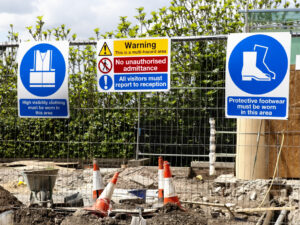
Mandatory signs tell people what they must do before entering an area, using equipment or carrying out a task. These are usually signs with clear instructions, such as to wear eye protection, ear protection, safety footwear, gloves, or a hard hat.
They are most common in workshops, warehouses, industrial units, laboratories, construction-related premises, maintenance areas, and other spaces where people must follow a specific instruction before entering.
A mandatory sign should be placed before the point where the action is required. If someone needs safety footwear in a warehouse, the sign should be visible before they enter the area. If eye protection is needed near machinery, the sign should be visible before someone starts work or approaches the equipment.
These signs are there to remove doubt. Staff, visitors and contractors should not need to guess whether protective equipment is needed or where a rule applies.
Prohibition Signs for Restricted Areas and Actions
Prohibition signs tell people what they must not do. These can include ‘no entry’, ‘no smoking’, ‘no parking’, ‘authorised personnel only’, ‘no pedestrians’, ‘no mobile phones’, or ‘staff-only’ signs.
For a shop, this may be as simple as stopping customers from walking into staff areas, stockrooms or behind the counter. For an office, it may mean keeping visitors out of plant rooms, server rooms or private work areas. In a warehouse, prohibition signs may help keep pedestrians away from vehicle routes or prevent unauthorised entry into loading areas.
These signs work best when placed at the point where someone is about to make a wrong move. A staff-only sign belongs on or beside the door people might try to use. A no pedestrian sign should appear before a route becomes unsafe for people on foot.
Good prohibition signs are direct and easy to understand. They should not rely on long wording or unclear symbols.
First Aid and Emergency Information Signs
First aid signs help people find help quickly if someone is injured or unwell. In a busy workplace, school, gym, office, shop or public-facing premises, staff and visitors should not have to search for the first aid box or ask several people who the first aider is.
First aid signs may point to the first aid box, first aider information, emergency contact details, an accident reporting point, or the defibrillator location, if one is available on site.
Alongside safety signage, internal signs can help people find reception, toilets, first-aid points, staff rooms, restricted areas, and exits without needing to ask.
These signs should be placed where people naturally look during an emergency. That may be near reception, staff rooms, kitchens, corridors, main work areas or notice boards. If the first aid point moves, the sign should be updated as well.
Emergency information needs to stay current. A sign with an outdated contact name, an old room location, or a damaged print can create confusion when people need quick information.
Safety Signs for Different Warrington Workplaces
Different Warrington businesses will need different safety signs depending on the premises and how people use the space. A new business should look at the actual routes, rooms, and risks rather than ordering a generic pack of signs.
Common examples include:
- Shops, cafés, salons and retail premises may need fire exit signs, staff-only signs, wet floor signs, cleaning area signs and customer direction signs.
- Offices, clinics, and public-facing buildings may need fire exit signs, first-aid signs, visitor direction signs, room signs, and restricted access signs.
- Warehouses, workshops and industrial units may need forklift signs, PPE signs, loading bay signs, vehicle route signs, warning signs and restricted area signs.
- Schools, gyms, and community buildings may need exit signs, first-aid signs, visitor signs, equipment warnings, and signs that make staff-only areas clear.
- Hospitality venues may need hot-surface signs, cleaning chemical signs, kitchen safety signs, staff-only signs, and customer route signs.
This is a starting point. The right signs depend on the work being done, the people using the premises and the areas where clearer instructions or warnings are needed.
Where Should Health and Safety Signs Be Placed?
A safety sign only works if people see it at the right time. It should be close enough to the risk or instruction to make sense, but early enough for someone to act.
Fire exit signs should guide people along escape routes and towards the correct exit. Hazard signs should appear before someone reaches the hazard. PPE signs should be placed before the area where protective equipment is required. First aid signs should help people find the first aid point or the information they need. Restricted area signs should be placed where someone might try to enter.
Avoid placing safety signs behind shelves, stock, doors, furniture or display stands. They should not be so high that people miss them or so low that they are blocked. If the layout changes, the signs should be checked again.
When Should Safety Signs Be Replaced?
Safety signs can become less useful over time. They may fade, crack, peel, become covered, display outdated information, or no longer match the way the premises are used.
You should review safety signs if they are:
- faded, cracked, peeling, dirty or hard to read
- showing old instructions, old room names, old contact details or outdated site information
- hidden by new furniture, stock, racking, displays or equipment
- no longer suitable after a layout change, refurbishment or change in how an area is used
- damaged by weather, cleaning, impact, heat, moisture or daily use
If someone cannot read the sign quickly, or if the sign no longer reflects the area where it is placed, it should be replaced or moved.
This is especially important after a refurbishment, shop refit, warehouse layout change, office move, new equipment installation or change in customer routes.
What to Check Before Ordering Safety Signs
Before ordering safety signs, it helps to gather the details that affect wording, size, material and fitting. This makes it easier to advise on what will work in the space.
Useful details include:
- the type of premises and the areas where signs are needed
- photos of doors, corridors, exits, hazards, equipment, walls, windows, fences or posts
- whether the signs will be used indoors or outdoors
- rough sizes or measurements of any existing signs
- whether the sign needs arrows, room names, contact names or custom wording
- whether the workplace layout has recently changed
- whether signs need to be fitted to walls, doors, windows, posts, fencing or machinery
Photos are often the best starting point. They show where the sign will be placed, what might block it and how people are likely to approach the area.
If the sign is for outdoor use, the material and fixing method may matter more. If it is for a door, window or internal wall, size, visibility and surface type are usually the main points to check.
Getting Health and Safety Signs Made in Warrington
If you are reviewing safety signage for a shop, office, warehouse, school, salon, café, gym, industrial unit, or public-facing premises, we can help you determine which signs need to be made, replaced, or updated.
We can also help with wider commercial signs in Warrington if your workplace needs safety signs, shopfront, office, window, or exterior signage.
Send us photos of the areas where signs are needed, rough sizes (if available), and details of where each sign will be fitted. We can help you choose signage that is clear, suitable for the space and easy to read before someone needs to act.
Call 01925 636275 or request a free quote for health and safety signs in Warrington.