
If you are opening a shop, replacing an old sign or adding illuminated signage, it is worth checking whether you need permission before the sign is made and fitted.
Many business owners call it “planning permission”, but for shop signs and outdoor business signage, the term you will often see is advertisement consent.
Some signs may need consent. Others may not. It depends on the size, position, lighting, building type and location. A small non-illuminated sign may be treated differently from a large illuminated fascia sign, projecting sign, light box or sign on a listed building.
This guide explains what to check before ordering a shop sign, when permission may be needed, and how to avoid paying for signage that cannot be fitted as planned.
This article is for general information only and focuses on signage in England. If you are unsure, check with your local planning authority before ordering or installing a sign.
Planning Permission vs Advertisement Consent
Before you order a new shop sign, it’s worth checking whether the council needs to approve the size, position or lighting before it is fitted.
For shop signs, fascia signs, illuminated signs and exterior business signage, this usually falls under advertisement consent.
Advertisement consent is the permission required to display certain outdoor signs or advertisements. This can include signs fitted to a shopfront, signs placed outside a premises, signs projecting from a building, and illuminated signs.
Do not assume every sign can be fitted without checking. A sign might be straightforward, but the details matter. Size, lighting, position, ownership of the building, and local restrictions can all affect what needs to be done before installation.
When Might a Shop Sign Need Consent?
A shop sign may need advertisement consent if it is large, illuminated, projecting, installed in a sensitive area, or different from what was previously there.
You should check before installation if your sign is:
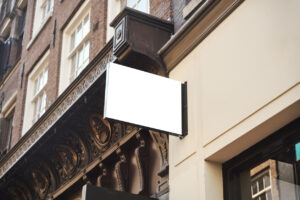
- A large fascia sign, light box, sign tray, projecting sign or illuminated sign
- Fitted to a listed building, conservation area, side wall, upper floor or near a road junction
- Larger, higher, brighter or more prominent than the sign it is replacing
A standard shop sign above the entrance may be simple, but consent can still depend on the size, lighting, position and building.
If the sign is being fitted to rented premises, you may also need permission from the landlord or property manager. That is separate from any council consent.
What About Small Signs?
Small signs are usually less likely to require consent, especially if they are simple, non-illuminated, and used to display a building name, business name, or basic information.
For example, a small sign showing a business name near an entrance may be treated differently from a large illuminated sign across a full shopfront.
Even so, it is worth checking the details to see whether the sign will be visible from outside, fixed to the building, or placed where people walk or drive past. A quick check before production can save time, money and hassle later.
Do Illuminated Signs Need Permission?
Illuminated signs are more likely to need checking before they are fitted. This includes light boxes, illuminated letters, neon signs and signs with internal or external lighting.
Lighting can affect how a sign is viewed from the street, nearby homes, pavements and roads. Councils may consider the brightness, position, size and whether the sign could distract road users.
Illuminated signs can be useful for shops, takeaways, salons, restaurants, gyms and businesses that open early or late. They can help customers find the premises in darker conditions, but the sign still needs to suit the building and location.
Before ordering one, it is worth checking where the sign will be fitted, how it will be lit and whether the building has any restrictions.
Can I Replace an Existing Shop Sign Without Permission?
You may be able to replace an existing shop sign without a complicated process, especially if the new sign is similar in size, position and type.
However, it is still worth checking if the replacement sign is larger than the old one, illuminated when the old one was not, fitted higher on the building or projecting further from the wall.
Replacing a faded panel with another panel of the same size may be simpler than replacing it with a larger illuminated sign tray or light box.
Before ordering a replacement sign, take clear photos of the existing sign, the full shopfront, the surrounding pavement and the area where the sign will be fitted. These photos make it easier to understand what is changing.
What About Pavement Signs and A-Boards?
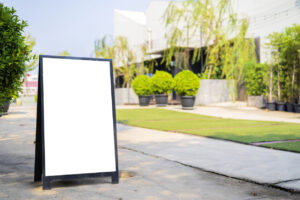
Pavement signs and A-boards can help shops, cafés, salons, restaurants, and other local businesses display offers, menus, opening times, or directions.
However, because they sit outside the premises, they need to be used carefully. A pavement sign should not block access, make it difficult for wheelchair users or push people towards the road.
Some councils have local rules on where pavement signs can be placed, how large they can be and whether a licence is needed. A pavement sign should help customers find you, not make the pavement harder to use.
What If My Shop Is Listed or in a Conservation Area?
If your shop is in a listed building, a conservation area, or a historic setting, check the rules before changing the signage.
Councils may look more closely at sign size, materials, colours, lighting, fixings and whether the sign suits the street or building. This does not mean you cannot have a visible shop sign. It means the sign may need to be planned more carefully.
For these buildings, it is useful to send photos of the whole shopfront, nearby signs, the existing sign and the surrounding street. That helps when thinking about size, placement, materials and whether illumination is suitable.
The Standard Conditions Outdoor Signs Should Meet
Outdoor signs and adverts are expected to meet basic conditions. These conditions are in place to ensure signs are safe, maintained, and do not pose a hazard to others.
In practical terms, your sign should be clean, tidy, safe, approved by the site owner and placed so it does not block official road or transport signs. It should not make roads, pavements or transport routes more hazardous. If the planning authority requires it to be removed, it should be taken down carefully.
For a shop owner, this means thinking beyond the sign’s appearance. A sign also needs to be fitted safely, maintained properly, and placed so as not to create problems for pedestrians, drivers, or neighbouring premises.
How to Make a Shop Sign Easier to Read
Permission is not the only thing to think about. Your sign also needs to work for customers.
A good shop sign should show who you are, what you do and where customers need to go. It should be readable from the pavement or road, depending on how people approach the premises.
Before finalising the design, think about how someone will see the sign in real life. Can the business name be read from the pavement? Is the wording short enough to understand quickly? Do the colours have enough contrast? Will anything block the sign from view? Does the sign match the rest of the shopfront?
A sign can look good on screen but still fail outside if the text is too small, the colours are too close together, or the most important information is placed where people will not see it.
In many cases, a simpler sign works better. Business name, clear branding and enough information to help customers recognise the premises.
Common Shop Sign Mistakes to Avoid
A new shop sign is an investment, so it is worth avoiding mistakes that make signage harder to read, fit, or approve.
Common problems include ordering a sign before checking permission, using text that is too small, adding too many services to one sign, choosing colours with poor contrast or using a low-quality logo file.
Placement matters too. A sign may be harder to read if it is fitted too high, partly hidden by another feature, or positioned where customers do not naturally look. A sign above a busy high street shop may need different wording and sizing from a sign on a quiet side street or industrial estate.
The best results usually come from planning the sign around the building, the street and the customer journey.
Do You Need a New Shop Sign?
If you are opening a new shop, replacing an old sign or updating your business signage, we can help you plan the right option before anything is made with our commercial sign-making services.
Send us photos of the shopfront, rough measurements, your logo or artwork, the type of sign you want, whether it needs lighting, your location and any deadline you are working towards.
We’ll help you choose a sign that clearly represents your business, suits the premises, and provides customers with the information they need.
Call 01925 938099 or contact us to request a free quote.